
GREEK BEEF AND TOMATO ORZO STEW
This Greek Beef and Tomato Orzo Stew is a high-protein, fiber-rich meal featuring tender beef, whole-wheat orzo, and a rich tomato sauce. A comforting dish, perfect for meal prep or a hearty family dinner.
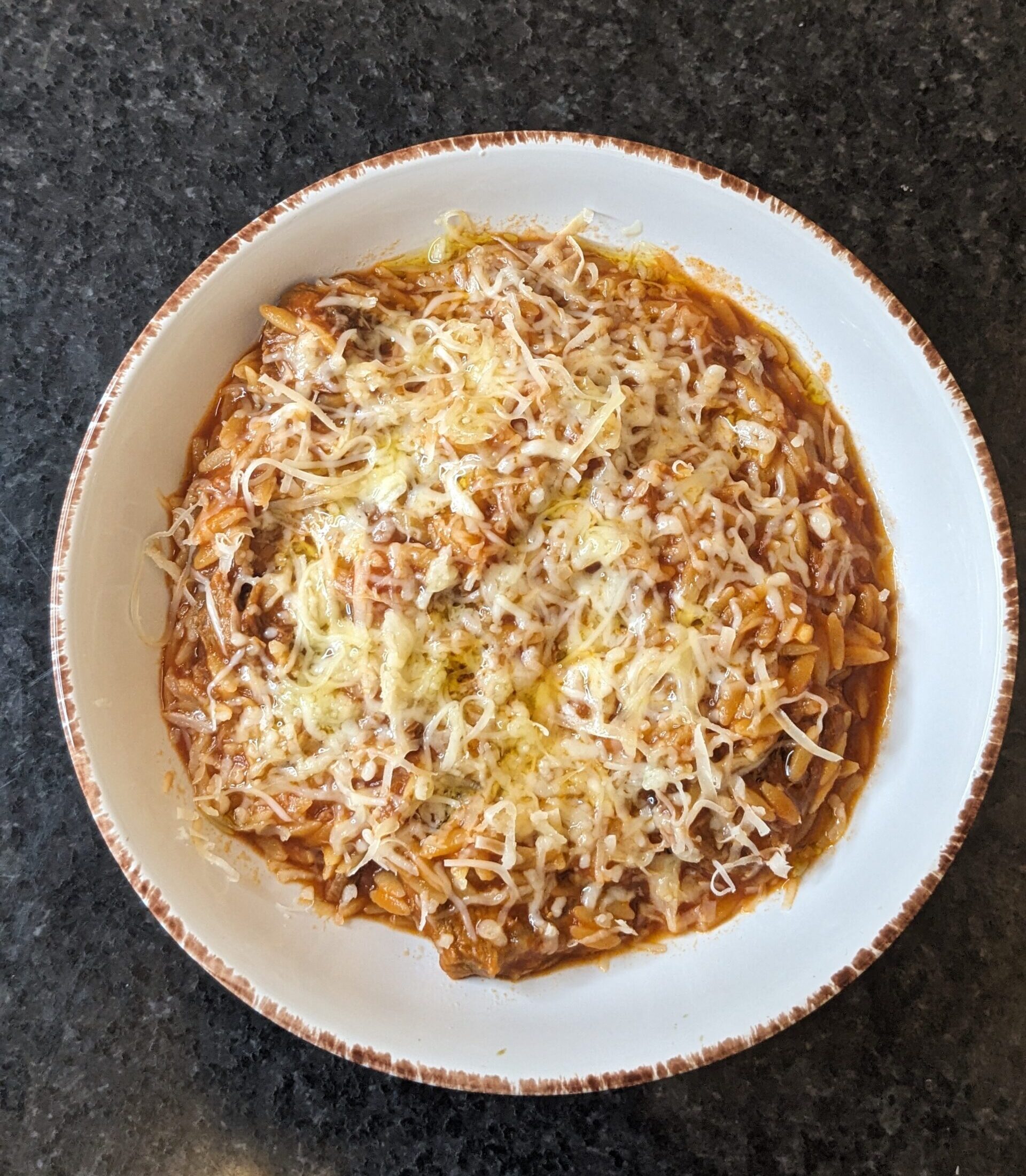
If you love comforting, protein-packed meals, this Greek Beef and Tomato Orzo Stew ("Κριθαράκι με Κρέας:" in Greek) is a must-try. A stovetop version of the traditional Giouvetsi, this dish features tender beef simmered in a rich tomato sauce with whole-wheat orzo. While it takes time to cook, the result is a hearty, satisfying meal that’s perfect for meal prepping or a cozy Sunday family dinner. If you are looking for meat-less version, you need to try my Cheesy Tomato and Zucchini Orzo!
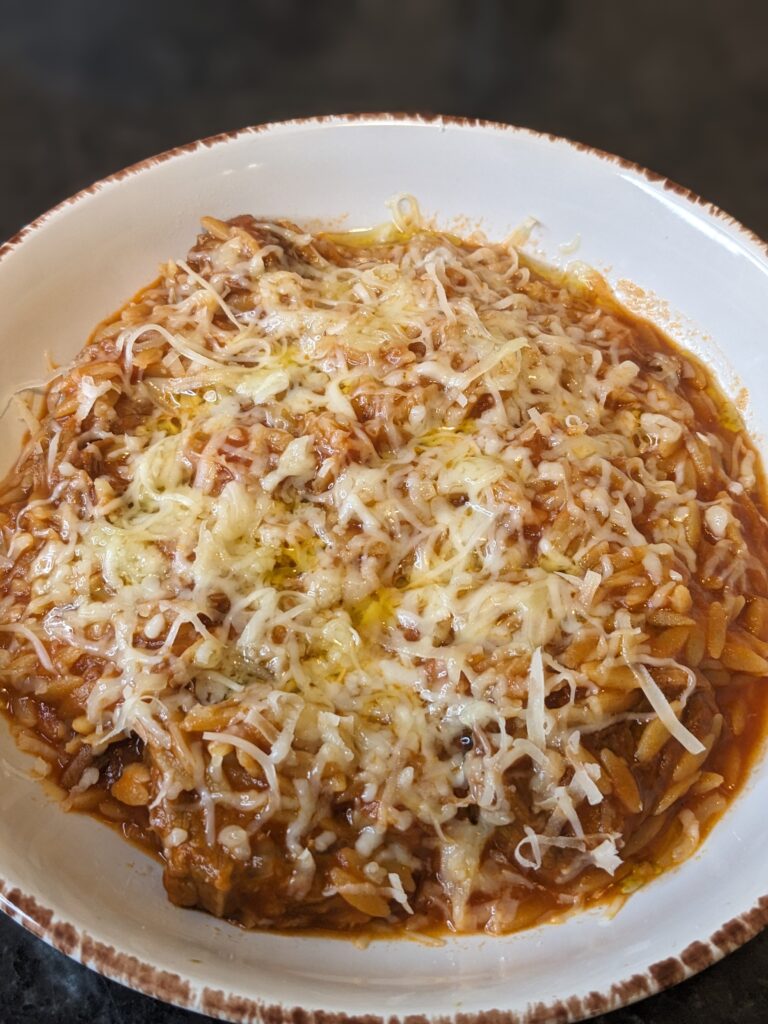
This dish is a true powerhouse, delivering 51 grams of protein and 7 grams of fiber per serving. The slow-simmered beef ensures deep, savory flavor, while the whole-wheat orzo adds extra fiber for a balanced meal. Topped with a sprinkle of shredded cheese, it’s a nourishing and delicious way to fuel your body.
Why You’ll Love This Recipe
What makes this recipe special is its deep connection to Greek tradition. I grew up eating this dish, learning to make it from my mother, just as she learned from hers. While classic Giouvetsi is oven-baked, this stovetop version speeds things up without sacrificing its rich, comforting taste. Whether you use beef, lamb, or chicken, this dish brings the warmth of Greek home cooking to your table.
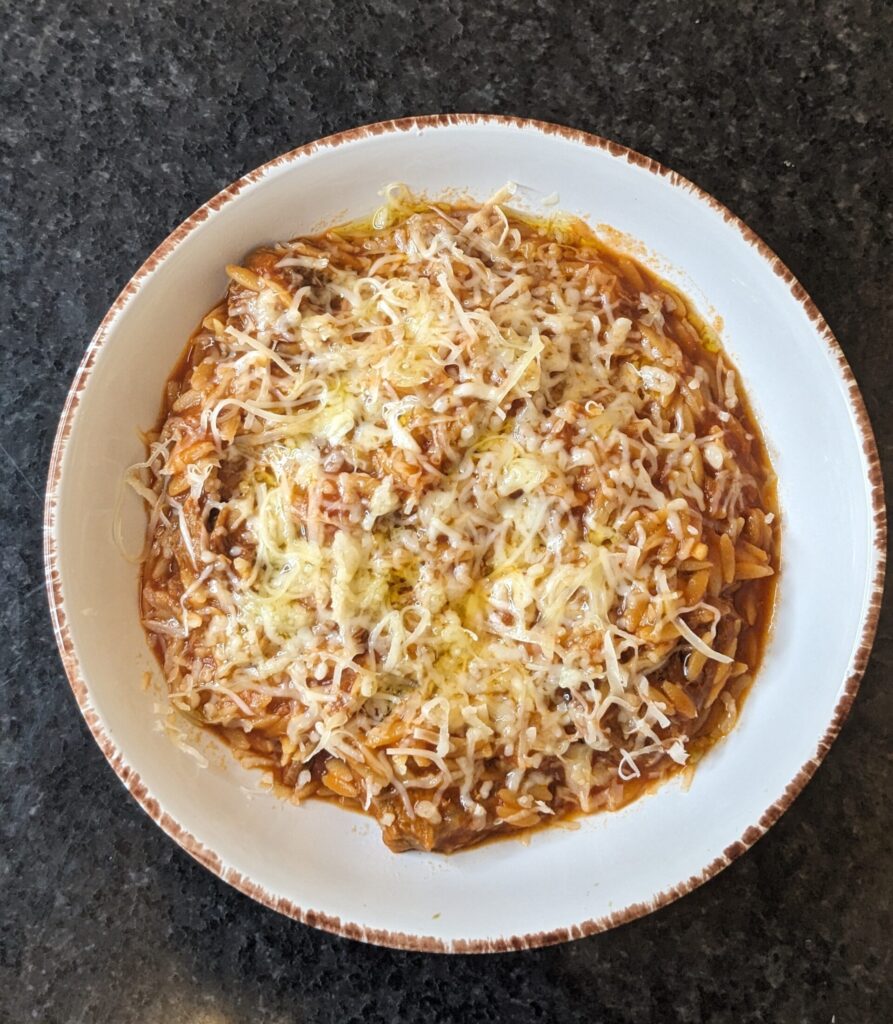
You’ll love this recipe because it’s both wholesome and satisfying. Each bite is filled with slow-cooked beef, tender orzo, and a rich, tomato-infused broth. Plus, it’s simple to reheat, making it ideal for leftovers. Whether you’re cooking for family or meal prepping for the week, this dish is sure to become a favorite!
Greek Beef and Tomato Orzo Stew Ingredients
Beef: Slow-cooked chuck pieces become tender and flavorful.
Homemade beef stock: Adds richness and depth to the stew.
Tomato sauce/purée (passata): Creates a smooth, hearty tomato base.
Olive oil: Extra virgin olive oil enhances flavor and adds healthy fats.
Orzo: Whole-wheat orzo provides fiber and a satisfying texture.
Seasonings: A simple mix of salt and pepper lets the ingredients shine.
Shredded cheese (optional): A sprinkle of cheese adds creaminess and extra protein.
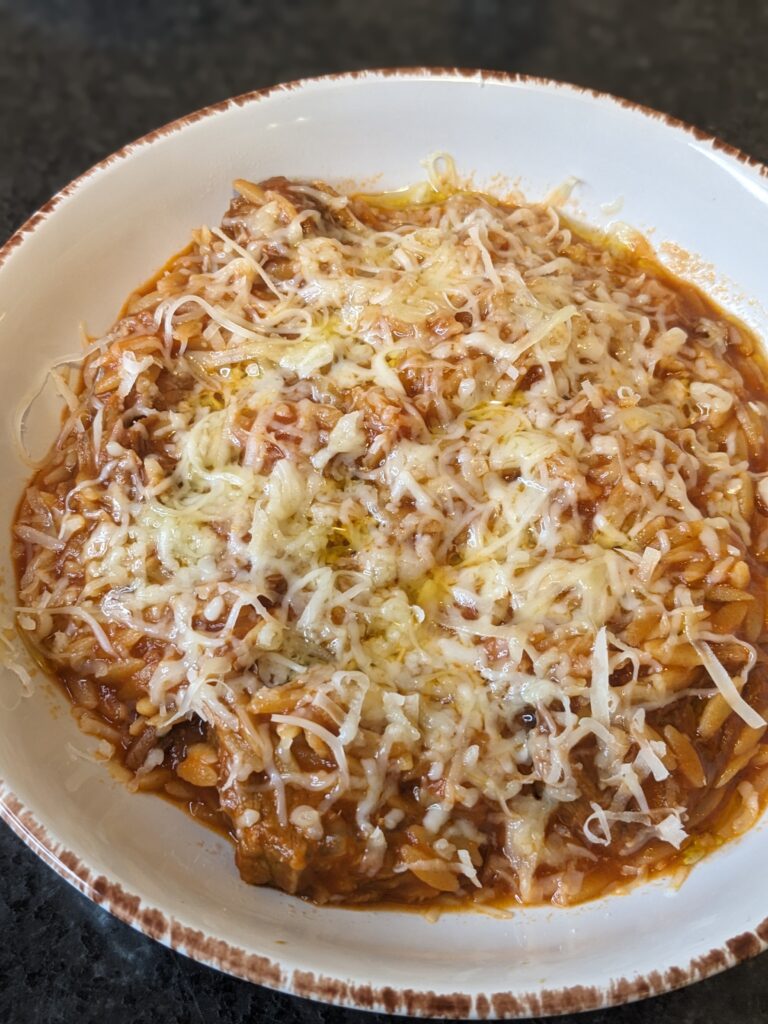
How to store leftovers
The best way to store or meal prep this dish is by following the cooking instructions until step 3. Firstly, add the cooked beef, reserved stock and the tomato passata to a large sauce pan and bring to a simmer for 2 minutes. Take off the heat and set aside.
Storage: Let the beef/tomato stock cool down at room temperature and store in an air tight container in the fridge for 3-4 days. When ready to eat, bring to a simmer, add the orzo and cook for 10-12 minutes. Serve warm.
Freezing: Let the beef/tomato stock cool down at room temperature and transfer to freezer-safe container and freeze up to 3 months. To reheat/cook, thaw it in the refrigerator over 24 hours and cook as mentioned above.
Share the foodie love
I can’t wait to see your own delicious creations! If you try this or any other recipe from our site, share a photo and tag me on Instagram @nutrijoint or you can leave a review or drop a comment below. Your feedback means the world to me! I hope you love it!
The recipe
GREEK BEEF AND TOMATO ORZO STEW
This Greek Beef and Tomato Orzo Stew is a high-protein, fiber-rich meal featuring tender beef, whole-wheat orzo, and a rich tomato sauce. A comforting dish, perfect for meal prep or a hearty family dinner.
No reviews yet
- Yield
- 3 servings
- Prep
- 5 min
- Cook
- 130 min
- Total
- 135 min
Serving changes scale numeric quantities only. Metric/US views separate equivalents already written by the author; Nutrijoint does not infer ingredient density. If an equivalent is unavailable, that ingredient keeps its authored measurement system; numeric quantities still scale with servings. Cooking times, temperatures and instructions do not change automatically.
Equipment
- Large sauce pan or stock pot
Ingredients
Beef/Stock
Beef and Tomato Orzo Stew
Topping (Optional)
Instructions
In a large stock pot, add the beef, chunks, water and salt and bring to a boil. Simmer at medium heat for 2 - 3 hours or until tender and soft (the meat should fall apart easily with a fork). You might need to add more water during to make sure it covers the meat fully while simmering.
Once the beef is cooked, drain with a sieve, reserving all the homemade beef stock/liquid left.
To prepare the orzo stew, add the cooked beef, reserved stock and the tomato passata to a large sauce pan and bring to a simmer.
Add the olive oil and orzo and simmer on low to medium heat for about 10-12 minutes or until the orzo is cooked through.
If there is not enough liquid until the orzo is cooked, add some more stock or water to achieve desired consistency.
Season with salt and pepper to taste.
Serve into a bowl, top with shredded cheese, a drizzle of olive oil (optional) and enjoy!
Notes
1. 600 g raw beef weighed about 375 g cooked (after stock was drained).
2. The cut of meat i used is called "ποντίκι" (pontiki) in Greek (extra large chunks around 200 g each) or else known as stewing beef steak or beef chuck pieces.
3. If the amount of reserved stock is not enough, fill in the rest with water).
4. For the cheese topping , I use a 50/50 mixture of regular fat shredded mozzarella and 5% fat high protein shredded cheese.
Nutrition information
Per serving
- Energy
- 533 kcal
- Protein
- 51 g
- Carbohydrate
- 51 g
- Fat
- 13 g
- Fiber
- 7 g
- Sugar
- 8 g
- Leucine
- 4 g
Per serving with Topping (20 g cheese)
- Energy
- 581 kcal
- Protein
- 57 g
- Carbohydrate
- 51 g
- Fat
- 16 g
- Fiber
- 7 g
- Sugar
- 8 g
- Leucine
- 4 g
The nutritional information provided is an estimate and is calculated based on the ingredients and quantities listed in the recipe. Unless specified, all macronutrients are rounded up to zero decimal places. Actual values may slightly vary depending on the specific brands and products you use. Please use this information as a general guide and consult your own calculations if needed. As the blog owner, I am not responsible for any discrepancies or variations in the estimated nutritional information.
Source: Existing Nutrijoint values supplied by Debbie; calculated from product labels and food databases. · Reviewed by Debbie.
Recipe reviews & questions